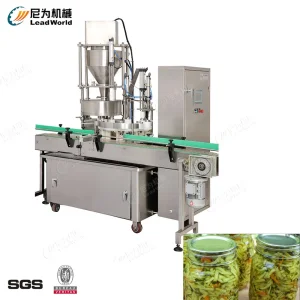
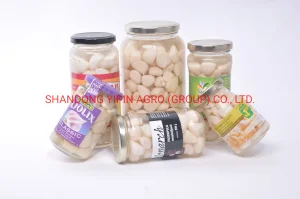
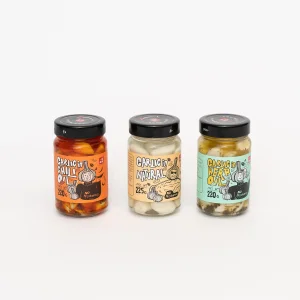
Industrial machinery and initial glass container systems deployed for South Sudanese agricultural processing hubs
South Sudan possesses immense, untapped agricultural potential. With vast arable lands across the Greater Equatoria, Bahr el Ghazal, and Upper Nile regions, the country has the capacity to produce a diverse range of crops, including mangoes, pineapples, tomatoes, peanuts, and various vegetables. However, a significant barrier to commercializing this agricultural wealth is the lack of proper preservation systems. High post-harvest losses remain a critical issue for local farmers, particularly during peak harvest seasons when excess yield is left to spoil due to inadequate storage and processing options.
Transitioning from basic subsistence farming to value-added food processing is essential for economic diversification in South Sudan. By converting fresh fruits into fruit jams, and seasonal vegetables into high-quality pickles and chili sauces, local agribusinesses can extend shelf life, reduce wastage, and substitute expensive food imports. Establishing local processing plants requires not only modern machinery but also reliable, food-grade packaging that can withstand challenging environmental and transport conditions.

Strategic Packaging Insight: The extreme temperatures and transport routes in East Africa mean packaging materials must be highly stable. Glass remains the premier choice for protecting pickles, jams, and honey from oxidation, moisture ingress, and ambient contamination, outperforming plastics under intense tropical conditions.
Precision-engineered glass container manufacturing complying with strict international food-safety criteria
Using pure silica sand and premium raw materials to ensure highly transparent, lead-free, non-reactive glass jars that maintain the natural taste and acidity of preserved pickles and jams.
Designed to withstand intense pasteurization and hot-filling processes (up to 120°C / Delta T 40°C), minimizing breakage rates during high-speed commercial bottling operations.
Precision-molded threads compatible with twist-off and deep-twist lug caps featuring plastisol liners, ensuring complete protection from ambient oxygen transmission.
For South Sudanese businesses located in Juba, Yei, Torit, or Wau, importing fragile materials like glass jars requires meticulous planning. South Sudan relies heavily on import corridors through neighboring countries. The most established shipping route for glass packaging products from China is via Mombasa Port in Kenya, followed by road transport through Uganda (Kampala) and across the Nimule border into Juba.
This transport corridor spans over 1,500 kilometers of mixed road conditions, making standard packaging configurations highly vulnerable. To mitigate transit breakage, Guangzhou Bogart Glass Products Co., Ltd. implements robust export packaging standards. We use reinforced double-wall corrugated cartons, high-density plastic shrink-wrapping, and heavy-duty, heat-treated wooden pallets. These precautions minimize internal friction and cushion the glass jars against the vibration and rough handling common along regional roadways, guaranteeing that the shipment arrives intact at your Juba processing facility.
South Sudan experiences a tropical climate with high temperatures, often exceeding 35°C (95°F) during the dry season. Under these intense ambient conditions, lower-grade plastic packaging (such as PET or PVC) can leach harmful chemical compounds into food products, affecting flavor, odor, and safety. Furthermore, plastics are gas-permeable, which allows oxygen to slowly infiltrate the container and cause spoilage, oil rancidity, or discoloration of delicate foods like mango jams, tomato pastes, and hot chili sauces.
Glass is completely inert and impermeable. It acts as an absolute barrier against moisture, air, and external contaminants, preserving the product's quality, color, and nutritional value for up to 24 months without refrigeration. This structural integrity makes glass packaging crucial for South Sudan's retail landscape, where electricity networks are limited and cold-chain distribution systems are practically non-existent.
| Parameter / Feature | High-Quality Glass Jars (Bogart) | Standard PET / Plastic Containers | Significance for South Sudan Market |
|---|---|---|---|
| Oxygen & Moisture Barrier | 100% Absolute Barrier | Permeable (causes oxidation over time) | Crucial for preserving pickles and jams in dry seasons. |
| Thermal Stability | Up to 120°C (Supports Hot-Filling) | Deforms at 55°C - 60°C | Allows safe sterilization without structural deformation. |
| Chemical Leach Resistance | Completely Inert (BPA & Lead Free) | Risk of chemical leaching in high heat | Protects consumers against chemical transfer in warm regions. |
| Stacking Strength | High load capability (multi-tier stacking) | Moderate (risk of collapsing under weight) | Optimizes warehouse storage space without collapse. |
Integrity, Advanced Technology, and Comprehensive Global Supply Solutions
Bogart Glass is a comprehensive industrial enterprise integrating research, mold development, high-volume production, and international logistics. Our manufacturing portfolio covers a wide range of specialized packaging, including cosmetic containers (essential oil, lotion, cream, and perfume bottles) and heavy-duty, food-grade glass jars complete with customizable closure systems (lug caps, pressure pumps, and sprayers).
Our factory utilizes advanced glass melting furnaces and automated forming lines to ensure high-efficiency production and dimensional accuracy. Through advanced surface processing technologies—such as high/low-temperature silk-screen printing, hot foil stamping, acid frosting, and precision polishing—we help food brands design premium, eye-catching labels directly onto the glass surface, bypassing the need for vulnerable paper labeling in humid climates.
Established core production facilities, focusing on standard glass blowing and forming. Expanded product ranges to support cosmetics and food container supply chains across China.
Integrated automated inspection systems. Established our international trading office in Guangzhou to simplify logistics, customs clearance, and global door-to-port deliveries.
Optimizing heavy-duty glass compositions and packaging techniques to serve expanding agricultural processing sectors across East and Central Africa.
Inside Bogart Glass's modern facility - ensuring consistent quality and defect-free supply chains
Advanced glass melting furnaces operate continuously to ensure thorough material homogenization. Automated glass-forming machinery guarantees consistent neck finishes, wall thicknesses, and bottom structural stability across large manufacturing runs.
We test raw materials before melting and utilize in-line optoelectronic camera systems to inspect every jar for cosmetic and structural defects, including bubbles, cracks, thin walls, and sealing thread inconsistencies.
Our dedicated engineering department develops customized glass containers based on customer sketches or dimensional blueprints, providing quick prototyping and volume mold production.
By using clean-burning fuel systems and recycling in-house cullet, we reduce energy consumption and carbon emissions, contributing to a more sustainable manufacturing cycle.
We provide full support throughout the purchasing cycle—from design consulting and trial sample production to customs clearing documentation and transit support.
Years of experience exporting to developing markets enable us to manage container space efficiently, select shipping routes with minimal transfer points, and secure competitive ocean freight rates.
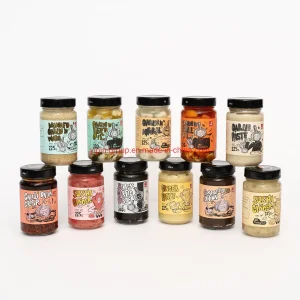
Wide selection of glass jars, preserved foods packaging, and machinery configurations ready for export
Expert answers regarding custom specifications, shipping logistics, transit risks, and minimum orders
 Bogart Glass