Direct access to certified glass production units, covering high-borosilicate storage systems, premium pharmaceutical packaging, and custom decoration solutions.


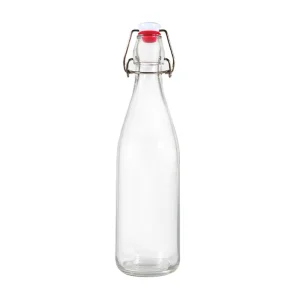
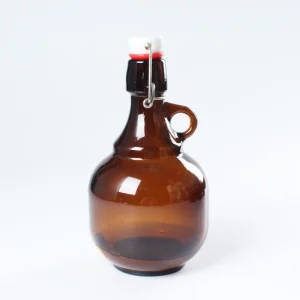
An engineering, supply chain, and procurement breakdown of why swing-top structures remain the gold standard for high-pressure and resealable glass vessel requirements globally.
In the contemporary FMCG, craft brewing, pharmaceutical, and high-end cosmetics packaging sectors, the selection of primary packaging material determines not only shelf life and product integrity but also the consumer's sensory interaction with the brand. The flip top glass bottle—historically referred to as the swing-top or lightning-toggle closure bottle—represents a mechanical and material marvel. First patented in the late 19th century, this closure mechanism utilizes a wire bale assembly, a rigid cap (typically ceramic, porcelain, or food-grade polypropylene), and an elastomeric gasket to form a highly resilient mechanical seal without the need for secondary capping machinery.
From a global procurement standpoint, the resurgence of flip top glass bottles is driven by two major market trends: environmental sustainability policies and the clean label movement. As countries enforce strict bans on single-use plastics and implement Extended Producer Responsibility (EPR) regulations, glass stands out as an infinitely recyclable substrate. The flip top mechanism enhances this value proposition by rendering the closure indefinitely reusable. This white paper serves as a comprehensive, E-E-A-T guided resource to help procurement directors evaluate flip top glass bottle manufacturers, understand engineering tolerances, navigate Chinese factory ecosystems, and select the right partner for industrial-scale deployment.
To audit a manufacturer effectively, procurement engineers must evaluate the mechanical components that constitute a certified swing top closure. A substandard assembly can lead to carbonation loss, product oxidation, leakage during thermal processing, or structural failure under pressure.
Industrial-grade wire bails must utilize SUS304 or SUS316 stainless steel to prevent corrosion from acidic food matrices, moisture, and cleaning chemicals. Lower-tier manufacturers often substitute galvanized iron, which degrades quickly under CIP (Clean-in-Place) washdowns.
The seal depends heavily on the polymer chemistry of the gasket. Food-grade EPDM, VMQ (Silicone), and thermoplastic elastomers (TPE) must be specified. They must comply with FDA 21 CFR 177.2600 and EU Regulation 10/2011, ensuring zero plasticizer leaching.
Standard bottles use Soda-Lime-Silica glass (Type III). For thermal-shock resistance (pasteurization/hot-fill operations up to ΔT = 60°C) or highly acidic content, Borosilicate 3.3 glass (Type I) is required. The glass must feature uniform wall thickness distribution, especially at the neck radius.
For products like fermented kombucha, sparkling cider, or craft lager, the bottle design must handle internal pressure. Bottles designed for carbonation must withstand at least 3.0 to 4.5 bar (approx. 43 to 65 PSI). Manufacturers should supply burst-test reports confirming they meet ASTM C147 standards.

An authoritative, comprehensive enterprise integrating professional research, design, production, and international logistics of premium glass containment systems.
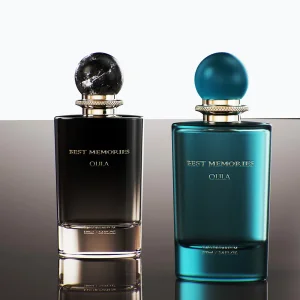
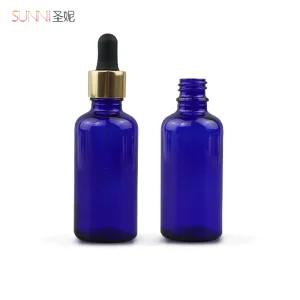
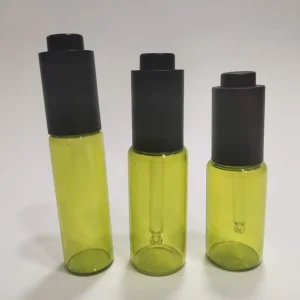
Bogart Glass represents the structural maturity of the modern Chinese glass supply chain. The factory specializes in cosmetic, beverage, and high-performance industrial glass packaging, offering an extensive selection of essential oil bottles, cream jars, lotion bottles, and custom glass perfume bottles. By integrating precision wire bail assemblies, Bogart Glass serves high-end beverage and cosmetic brands requiring high resealability, pressure durability, and premium design.
The company provides advanced surface treatment options, including high and low-temperature silk-screen printing, spray painting, hot silver/gold stamping, frosting, grinding, spraying, and manual/mechanical polishing. These options allow brands to create bespoke visual designs directly on the glass body.
Expanded production lines to cover specialized cosmetic glass bottles, lotion bottles, and advanced surface finishes. Perfected high and low-temperature silk-screen printing processes and optimized sanding methodologies, establishing a strong presence in domestic supply networks.
Achieved breakthroughs in precision hot stamping and silver stamping technologies. Upgraded industrial sanding and polishing lines, and established a dedicated international trade division in Guangzhou to serve global brands, major craft breweries, and global cosmetic conglomerates.
Integrated automated optoelectronic inspection systems and high-capacity melting furnaces to reduce energy consumption. Implemented rigorous Quality Control protocols to guarantee zero-defect shipments for international bulk orders.
Advanced glass melting furnaces ensure that glass raw materials are fully melted. This produces a high daily volume of molten glass, maintaining physical homogeneity and meeting large-scale production requirements.
Every batch of silica sand, soda ash, and limestone undergoes strict testing to verify chemical purity and prevent trace heavy metal contamination (compliant with RoHS and FDA regulations).
A dedicated R&D team of material scientists and process designers develops custom molds. They ensure correct neck dimensions and secure toggle-anchor points for swing top assemblies.
Procuring glass bottles from China offers more than just unit-cost savings. It connects buyers with a highly integrated supply chain ecosystem. The transition of Chinese glass manufacturing to Industry 4.0 has changed how global buyers manage inventory, mitigate risks, and handle custom product designs.
The global demand for flip top glass bottles spans several distinct commercial sectors. Understanding these applications helps buyers specify the right technical features when ordering:
| Industrial Sector | Primary Application | Critical Technical Requirement | Recommended Glass Type |
|---|---|---|---|
| Craft Beverages & Beer | Growlers, IPAs, Lagers, Kombucha | High carbonation retention (3.5+ bar), Amber/UV filtration | Type III Soda-Lime (Amber/Brown) |
| Artisanal Oils & Vinegars | Cold-pressed olive oil, infused vinegars | Hermetic oxygen barrier, precise pour control lip | Type III Clear or Forest Green |
| Cosmetics & Apothecary | Premium body oils, bath salts, luxury tonics | Bespoke surface frosting, chemical resistance to essential oils | Type I Borosilicate or Treated Soda-Lime |
| Pharmaceutical / Vet Medicine | Liquid solutions, chemical storage, injectable bases | Sterilizability (autoclave safe up to 121°C), hydrolytic resistance | Type I Borosilicate / USP Type I |
To assist your procurement selection process, here is a detailed breakdown of the top ten global manufacturers of swing-top and flip top glass containers, evaluated on capacity, compliance, and technological capability.
Understanding localized application scenarios helps align your container selection with the regulatory and environment-specific expectations of your target market:
Artisanal Fermentation (North America & Northern Europe): In regions with established craft markets, consumers associate swing-top growlers with premium, locally sourced products. These bottles need to handle pressure fluctuations and withstand home sterilization, making a robust wire bail and thick glass base essential.
Premium Olive Oils & Condiments (Mediterranean & APAC Export Markets): Edible oils need protection from UV light to prevent oxidation. Factories address this by using forest green or dark amber glass, combined with an airtight flip top cap that prevents drippage and seals out oxygen during use.
Zero-Waste Retail Systems (Urban Centers Globally): Package-free grocery stores rely on durable, reusable containers. Flip top bottles are perfect for this setting because they can be washed and reused repeatedly, highlighting the sustainability profile of the brand.
Answers to technical and regulatory questions commonly encountered by procurement teams during the evaluation process.
Browse our range of luxury packaging, chemical storage options, and decorative glass designs built to meet strict global safety and quality standards.


 Bogart Glass