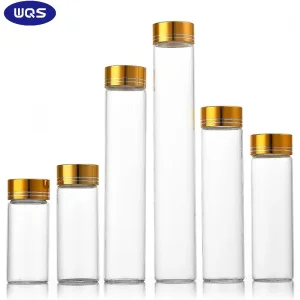
Explore our diverse product lines manufactured to meet global compliance standards and custom aesthetic requests.


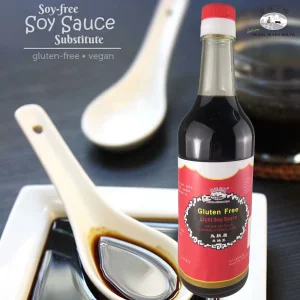
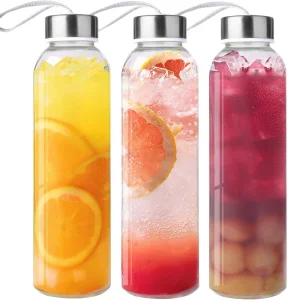

Regular Mouth Mason Jars (featuring a standard outer diameter profile of approximately 2.75 inches / 70 mm) remain a foundational format in global industrial packaging, household preservation, and artisanal retail. Across North America, Europe, and the Asia-Pacific region, commercial entities are shifting rapidly from single-use plastics to highly recyclable glass packaging. Driven by regulatory pressures, ESG (Environmental, Social, and Governance) targets, and evolving consumer health awareness, the demand for premium soda-lime and borosilicate glass storage has reached unprecedented volumes.
B2B buyers, food processors, cosmetic brands, and large-scale wholesalers do not simply look for basic containers; they require structural integrity capable of withstanding strict pasteurization, vacuum-sealing processing temperatures, and automated filling-line pressures. To minimize micro-fracturing and physical failures, modern manufacturing processes must implement rigorous thermal-shock treatments, precise annealing control, and automated dimensional tolerances. Finding a dependable manufacturer and exporter in China that bridges the gap between high-yield raw output and artisanal surface finishes is a critical task for purchasing departments worldwide.
| Property / Dimension | Standard Specification | Industrial Quality Limit | Key Application Relevance |
|---|---|---|---|
| Outer Finish Diameter | 70 mm (Regular Mouth) | ± 0.5 mm Tolerance | Compatible with standard two-piece sealing bands & continuous thread caps |
| Thermal Shock Resistance | Up to Δt = 42°C (Standard Soda-Lime) | Δt ≥ 50°C (High-Grade) | Withstands commercial pasteurization and hot-filling methods |
| Internal Pressure Threshold | Min. 1.2 MPa | Up to 1.8 MPa | Ensures integrity during structural vacuum-sealing and pressure cooking |
| Annealing Value | Grade 2 - Grade 3 (ASTM C148) | Grade 1 (Tempered/High Annealed) | Determines fragility reduction and resistance to micro-fractures |
By understanding the critical interplay of raw chemical composition (such as optimizing the silica, sodium carbonate, and calcium oxide ratio), manufacturers can guarantee high transparency, scratch resistance, and structural stability. This level of technical oversight is exactly what elevates standard glass factories to top-tier exporting enterprises.
Established as a comprehensive manufacturing enterprise, Guangzhou Bogart Glass Products Co., Ltd. integrates research, design, production, and international trade operations. While our state-of-the-art facilities specialize in high-end cosmetic packaging—such as essential oil bottles, luxury perfume flacons, lotion pumps, and cream containers—our rigorous production standards extend directly into our industrial glass and Mason jar lines.
By leveraging advanced glass melting furnaces, modern automatic press-and-blow machinery, and complex surface-treatment techniques, we produce high-performance glass packaging. Our post-processing capabilities are among the most advanced in China, featuring high and low temperature screen printing, electrostatic spray painting, hot stamping (gold and silver foil), acid etching/frosting, mechanical polishing, and precision metal cap/assembly pairing. We serve buyers globally with consistent, reliable supply chain solutions.

Equipped with computerized melting controls, our furnaces generate high-purity glass liquids. This maximizes daily output while maintaining zero critical bubble defects.
Every single batch of raw materials (silica sand, soda ash, limestone) is analyzed. Our testing spans raw inputs through final pre-shipment inspections.
Our dedicated structural engineering and design team supports OEM/ODM development, ensuring your custom glass designs meet mechanical pressure realities.
How Bogart Glass built a global reputation through systematic upgrades in manufacturing, decoration, and logistics.
Accumulated manufacturing expertise, optimized standard glass-molding mechanics, and focused on regional market quality. Expanded production capacity to support local cosmetic glass packaging lines, optimizing precision screen printing, surface etching, and sanding.
Achieved key technical breakthroughs in electroplated hot stamping/silvering, electrostatic spray-painting lines, and professional chemical-resistant glass formulation. Established our dedicated foreign trade branch in Guangzhou to direct exports, serving premium global clients and expanding into international trade shows.
Integrated automated visual sorting equipment (optical camera systems) to check glass thread accuracy and surface smoothness. Upgraded furnaces to meet modern energy-efficient targets, ensuring compliance with US FDA, European LFGB, and strict ISO packaging certifications.
When sourcing Regular Mouth Mason Jars at scale, purchasing managers must align their specifications with the requirements of automated processing systems. The structural geometry of the thread, the distribution of glass wall thickness, and the formulation of the batch materials directly impact processing efficiency and break rates.
Industrial-grade Mason Jars are primarily produced from Type III Soda-Lime-Silica glass. The chemical composition is carefully balanced to ensure maximum mechanical strength and chemical durability:
To prevent structural degradation from scratching during transit and conveyor-belt collisions, a dual-coating protection process is utilized:
The mouth finish is the most critical area of a Regular Mouth Mason Jar. Any variance in the thread dimensions can result in micro-gaps, leading to seal failure and spoilage. Using CAD modeling, CNC-machined steel molds, and automatic inspection equipment, we maintain dimensional variations within 0.3mm. This guarantees consistent compatibility with standard continuous thread (CT) metal caps.
Successfully exporting thousands of metric tons of glass containers to global markets requires strict compliance with food contact safety standards. All glass products are regularly tested and certified to comply with the following regulatory frameworks:
To prevent shipping breakage, our export packaging includes heavy-duty corrugated cartons, custom foam dividers, and plastic-wrapped wooden pallets. This packaging is designed to handle the movements of intermodal sea freight and long-distance trucking. We also provide full documentation support (including Bills of Lading, Certificates of Origin, and Customs Declarations) to ensure a smooth import process through ports globally.
Get professional technical answers to common B2B glass sourcing questions.
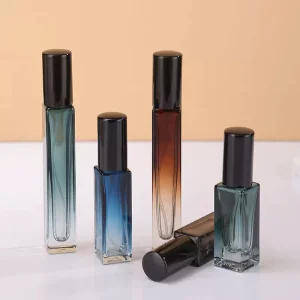
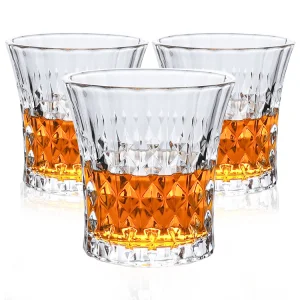
Browse our cosmetics, seasoning, and premium beverage bottles, all customizable to match your brand identity.


 Bogart Glass