How to Store Glass Bottles Without Damage or Dust?

Time:2026-09-25 Author:Henry
0%

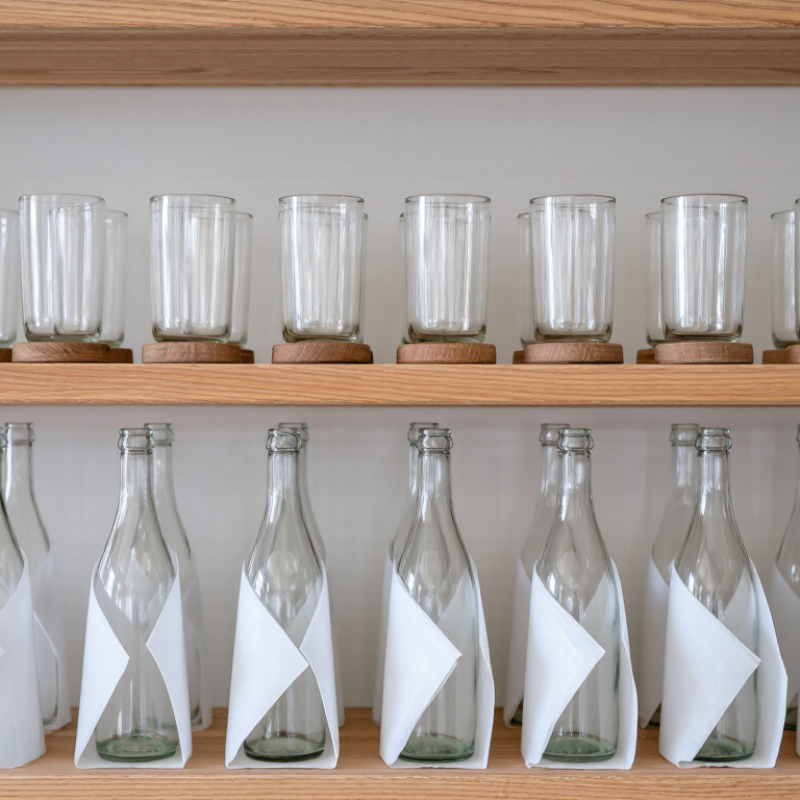
How to store glass bottles to avoid damage and dust begins with one simple idea: glass needs stability, not excessive handling. A bottle may look strong, yet a small chip around its rim can spread after repeated contact. Dust can also settle inside the neck, especially when bottles remain uncovered on open shelves.

Dr. Ian Freestone, an archaeological glass specialist, emphasizes a careful conservation principle: “Glass survives best when its environment changes slowly.” That guidance matters in homes, museums, warehouses, and retail storage areas. Keep bottles away from direct sunlight, radiators, damp corners, and busy walkways. Use a clean, padded shelf with enough space between each bottle. Do not stack them unless a tested divider system supports every layer.

Small details matter. Wipe shelves with a soft, lint-free cloth before placing bottles. Cover unused bottles with breathable, acid-free tissue or clean protective sleeves. Plastic wrap may trap moisture. That can create problems later. Store each bottle upright when its shape allows, but check unstable or unusually shaped containers carefully.

Avoid sudden temperature changes.

I have found that “dust-free” is not always realistic. A sealed room may still collect particles, and rushed cleaning can cause scratches. Inspect stored bottles periodically. Lift them with both hands, especially when condensation, labels, or fragile decorations are present. This approach is not perfect, but it reduces preventable damage and makes storage easier to review over time.
How to Store Glass Bottles Without Damage or Dust?

Identify Glass Type and Thermal Risk: Soda-Lime Glass Expands ≈9 × 10⁻⁶/K

Before storing bottles, identify the glass and consider temperature swings. Soda-lime glass, common in everyday containers, has a linear thermal expansion coefficient of about 9 × 10⁻⁶ per kelvin. ASM International’s Engineered Materials Handbook: Ceramics and Glasses gives this approximate value for soda-lime glass. A one-meter length changes by roughly 0.18 millimeters across a 20°C temperature shift. A 70-millimeter-wide bottle changes by only about 13 micrometers. Small, but not irrelevant.

Uneven heating or cooling can create stress, especially where glass touches a cold wall or another bottle. Keep bottles away from sunny windows, radiators, and drafty exterior walls. Let recently moved bottles adjust gradually; avoid placing warm glass on a cold stone shelf. That coefficient is a guide, not a guarantee: bottle shape, thickness, flaws, and handling also matter. I would not treat every bottle as equally robust. Store bottles upright with a little space between them, using dividers to prevent clinks. A clean, closed cabinet helps keep dust off without trapping bottles against one another. For testing expansion consistently, ISO 7991:1987 specifies a method for measuring glass’s mean linear thermal expansion.

Clean and Dry Bottles Before Packing; Seal Openings to Keep Dust Out

How to Store Glass Bottles Without Damage or Dust?

Clean and dry every bottle before packing. Rinse away powder, labels, and invisible residue. Then drain bottles upside down on a clean, lint-free rack. Moisture trapped inside can encourage odors, staining, and microbial growth. The U.S. Pharmacopeia emphasizes controlled container cleanliness for pharmaceutical packaging, although ordinary storage may not require the same level. It still sets a useful professional benchmark.

Seal each opening with a clean cap, plug, or temporary cover. Never leave bottle mouths exposed on open shelving. ISO 14644-1 allows up to 3,520,000 particles at 0.5 micrometers per cubic meter in an ISO Class 8 environment. A normal storeroom can be dustier. Small sealing steps matter.

Wrap bottles separately with acid-free paper or foam sleeves, then place them upright in divided cartons. Avoid stacking heavy boxes directly on fragile glass. ASTM D4169 evaluates packaging through vibration, shock, and compression, showing why stable packing is more reliable than appearance alone. Keep cartons away from floors, windows, and damp walls. Check them monthly.

One mistake is packing too quickly.

A bottle may look dry while holding water near its shoulder or thread. I would inspect several bottles again before sealing the entire carton, because a rushed inspection can weaken an otherwise careful storage system.

Select Dividers and Cartons That Prevent Glass-to-Glass Contact

How to Store Glass Bottles Without Damage or Dust?

Glass bottles need more than a sturdy carton. They need separation. In storage work, I have seen bottles chip when their shoulders touched during minor movement. A well-fitted divider prevents this glass-to-glass contact. It also keeps bottles upright and reduces pressure on narrow necks.

Choose dividers made from firm, clean material with enough depth to support each bottle. Each cell should hold one bottle without forcing it into place. Measure twice. A loose divider allows shifting, while an overly tight cell can create pressure points. Corrugated partitions work well for lighter bottles, but thicker inserts may suit heavier glass. Check the edges carefully. Rough cuts can scratch labels or damage protective wrapping.

The carton should match the divider’s shape and height. Leave little empty space above the bottles, but avoid crushing the top layer. A small paper pad can reduce movement without pressing directly on the glass. Keep cartons on a dry, raised surface, away from walls and dusty floor areas. Before sealing, inspect every cell for crumbs, broken fibers, or moisture. I once reused a carton that looked clean, but hidden dust settled inside the bottle mouths. That mistake was avoidable. Still, some storage conditions change unexpectedly, so inspect the cartons again after handling or relocation.

Stabilize Storage Conditions: ISO 2233 Reference of 23°C and 50% RH

How to Store Glass Bottles Without Damage or Dust?

Glass itself is stable, but sudden temperature changes, impacts, and poor packaging can still cause trouble. ISO 2233:2017 gives a conditioning reference for packaged items: 23°C ±2°C and 50% ±5% relative humidity. ASTM D4332-22 also uses these conditions as a standard atmosphere for testing packaging. Treat them as useful benchmarks, not a universal warehouse rule. Small shifts matter.

Keep bottles upright in fitted dividers, with space between cartons and cold exterior walls. Store cartons on shelves or pallets, away from direct sunlight, heaters, and damp floors. A stable room near 23°C and 50% RH helps limit moisture-related damage to paper labels and outer packaging. Cover open cases with clean, breathable material; sealed plastic can trap condensation when temperatures change. Keep them covered. Check corners and bottle bases during routine inspections, where chips may be easy to miss. Dust still settles, even in a tidy room. Measure temperature and humidity with a calibrated monitor, and record readings rather than relying on feel. This target is not magic; local conditions and packaging materials may need adjustment.

How to Store Glass Bottles Without Damage or Dust?

Stabilize Storage Conditions — ISO 2233 Reference: 23°C and 50% RH

ISO 2233’s 23°C / 50% RH conditioning atmosphere is commonly specified with tolerances of ±2°C and ±5% RH. Keeping conditions steady can help reduce condensation risk; store bottles upright in clean, padded, stable shelving to limit impact and dust. These figures are a conditioning reference, not a universal storage requirement for every bottle or product.

Control Dust and Inspect Stock: ISO Class 8 Limit Is 3.52M Particles/m³*

Glass bottles stay cleaner and safer when storage conditions are controlled. Keep them in a dry, covered area, away from doorways and active packing zones. Use clean racks with dividers so bottles cannot touch, roll, or strike hard surfaces. Leave space between cartons and walls for inspection and cleaning. Avoid stacking beyond the packaging limit; a small shift can create chips that are hard to spot.

For dust control, ISO Class 8 allows up to 3.52 million airborne particles per cubic metre at particle sizes of 0.5 micrometres or larger. This is a measured cleanliness limit, not a promise that every bottle is dust-free. Track room readings, clean shelves with low-lint materials, and inspect stock when it arrives and before use. Look closely at bottle mouths, bases, and carton corners. A checklist helps, but it can still miss a faint film or hairline chip. Review the process when defects recur.

Tips: Keep bottles covered until needed. Use soft separators, not loose paper. Check a few bottles from each carton, and record dust, chips, or damaged dividers. Small checks matter.

FAQS

What temperature and humidity are useful for storing glass bottles?

A useful reference is 23°C ±2°C and 50% ±5% relative humidity. These are benchmarks, not universal warehouse rules.

How should bottles be arranged in storage?

Keep bottles upright in fitted dividers. Leave space between cartons and cold exterior walls. Prevent bottles from touching or rolling.

Where should cartons be kept?

Place cartons on shelves or pallets, away from sunlight, heaters, damp floors, and busy doorways. Keep them covered.

How can open cartons be protected from dust?

Use clean, breathable material over open cases. Sealed plastic may trap condensation when temperatures change. Dust still settles.

What cleanliness limit does ISO Class 8 describe?

It allows up to 3.52 million airborne particles per cubic metre, at sizes of 0.5 micrometres or larger. This is a measured limit, not a dust-free guarantee.

What should staff check during inspections?

Inspect bottle mouths, bases, carton corners, and dividers. Look for dust, chips, or hairline damage. A checklist can still miss something.

How can storage conditions be monitored?

Use a calibrated temperature and humidity monitor. Record readings instead of relying on how the room feels. Small shifts matter.

How should shelves and cartons be cleaned?

Clean shelves with low-lint materials and leave space around cartons for inspection. Use soft separators, not loose paper. Review the process if defects recur.

Conclusion

How to store glass bottles to avoid damage and dust begins with understanding the glass and preparing each bottle carefully. Soda-lime glass expands by approximately 9 × 10⁻⁶ per degree Kelvin, so sudden temperature changes can create stress. Clean bottles thoroughly and let them dry completely before packing to prevent residue or moisture from being trapped. Cover or seal each opening to keep dust out, then use dividers and sturdy cartons to prevent bottles from touching one another during storage or handling.

Keep the storage area stable and clean. As a reference condition, ISO 2233 uses 23°C and 50% relative humidity for conditioning packaging, which can help guide consistent storage practices. Limit airborne dust, keep cartons closed where practical, and inspect stored stock regularly for cracks, chips, moisture, or damaged packaging. ISO Class 8 particle limits can also serve as a cleanliness reference, with a stated limit of 3.52 million particles per cubic meter.

Henry

Henry

Henry is a dedicated marketing professional with a profound expertise in the company's offerings. With years of experience in the industry, he possesses an impressive understanding of the market dynamics and consumer behaviors that drive success. Henry is committed to sharing his insights through......