How to Produce High Quality Glass Bottles?

Time:2026-10-20 Author:Sophia
0%

Producing reliable glass packaging requires more than melting sand. It demands controlled chemistry, stable heat, accurate forming, and disciplined inspection. So, what is the production process of high-quality glass bottles? The answer begins with carefully selected silica sand, soda ash, limestone, and recycled cullet. Each material must meet strict purity requirements. Small iron contamination can create unwanted green tones.

“Quality is built into the melt, not inspected into the bottle,” says Dr. A. K. Varshneya, a respected glass science authority. His statement captures an important manufacturing reality. Furnace operators monitor temperatures near 1,500°C, while sensors track viscosity and furnace pressure. The molten glass then moves through controlled channels. Individual gobs are cut to precise weights. Forming machines shape them inside metal molds within seconds.

The bottles are not finished yet. They pass through an annealing lehr, where controlled cooling removes internal stress. Sudden cooling can produce invisible weaknesses. That risk deserves attention. Inspectors then check dimensions, wall thickness, cracks, bubbles, stones, and sealing surfaces. Cameras detect defects that human eyes may miss. However, automated inspection is not perfect. Operators still need experience, especially when unusual shapes or recycled content affect the process.

A high-quality bottle should feel balanced in the hand. Its base should sit securely. Its neck should accept the closure smoothly. Consistent production depends on documented procedures, calibrated equipment, trained technicians, and honest corrective action. Even advanced factories can improve. The strongest manufacturers treat every rejected bottle as useful evidence, not merely as waste.
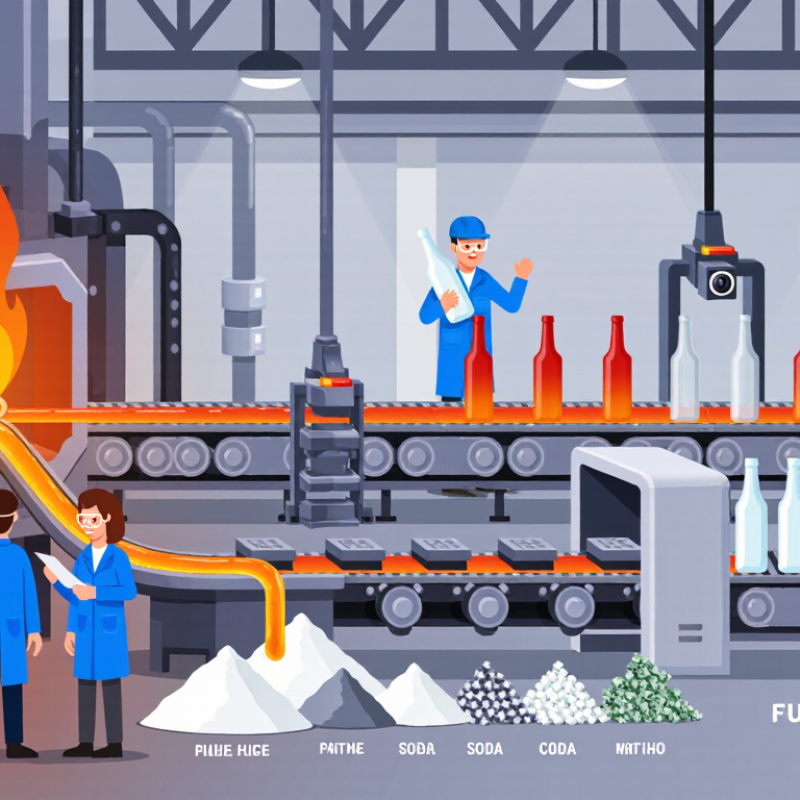
How to Produce High Quality Glass Bottles?

Raw Materials and Glass Composition for Bottle Manufacturing

How to Produce High Quality Glass Bottles?

Raw materials determine a bottle’s strength, clarity, color, and thermal performance. A typical soda-lime glass batch contains silica sand, soda ash, limestone, dolomite, alumina, and recycled glass cullet. Silica forms the network. Soda ash lowers the melting temperature. Limestone and dolomite improve chemical stability and durability.

Cullet matters greatly. The European Container Glass Federation reports that every 10% increase in cullet can reduce furnace energy use by about 2–3%. It can also lower carbon emissions by roughly 5%. However, recycled glass must be carefully sorted. Ceramic fragments, stones, and heat-resistant glass may create inclusions or bottle fractures. Small contamination can cause large losses.

Color requires discipline. Flint glass needs low iron materials, while amber and green bottles tolerate higher iron levels. Moisture, grain size, and batch uniformity also affect melting behavior. In practical production, operators check sand chemistry, cullet cleanliness, furnace temperature, and glass homogeneity together. One measurement is never enough.

The recipe is not perfect.

The International Organization for Standardization’s ISO 9001 quality principles support traceable testing and corrective action during production. Still, even a controlled batch can behave differently when furnace conditions change. That is why manufacturers should review viscosity, wall thickness, thermal shock resistance, and visual defects after each production run. A stronger formula may increase cost, and a cheaper formula may reduce reliability. Good bottle manufacturing depends on balancing both.

How to Produce High Quality Glass Bottles?

Representative oxide composition of soda-lime-silica container glass by mass. Actual formulations vary according to bottle color, strength, melting conditions, and recycled glass content.

Key insight: Silica forms the glass network, while sodium oxide lowers the melting temperature. Calcium oxide and magnesium oxide improve chemical durability and stability, and alumina enhances strength and resistance to thermal shock.

Melting and Refining the Glass Batch

How to Produce High Quality Glass Bottles?

Melting and Refining the Glass Batch

High-quality glass bottles begin with a controlled batch, not a hurried furnace. The recipe usually combines silica sand, soda ash, limestone, and carefully measured recycled glass. Each material needs stable moisture, particle size, and chemical composition. In my production experience, small variations can create stones, cords, or visible bubbles. Batch weighing must be verified with calibrated scales and recorded for traceability. Clean storage matters. Damp or contaminated materials may disturb melting and increase defects.

Inside the furnace, heat should rise evenly through the batch. Operators monitor temperature zones, flame conditions, and melt movement instead of relying on one reading. Refining removes trapped gases through time, heat, and suitable convection. If the melt leaves too early, bubbles may survive into forming. If it stays too long, energy use rises and refractory wear may accelerate. That balance is difficult. Regular sampling helps confirm viscosity, color, and homogeneity. I would question any “perfect” setting because furnace behavior changes with weather, moisture, and recycled content.

Tips: Keep batch silos dry and covered. Check scales before every shift. Inspect hot samples for bubbles and unmelted grains. When defects appear, review the batch record before changing furnace temperature. That pause can prevent a wrong correction.

Forming Molten Glass into Bottle Shapes

How to Produce High Quality Glass Bottles?

Forming molten glass into bottle shapes requires careful control from the furnace to the final mold. Molten glass usually leaves the forehearth as a measured gob, with a consistent temperature and weight. The gob enters a blank mold, where air or mechanical pressure creates a preliminary shape. This stage must form a stable neck, shoulder, and wall thickness.

The partly formed bottle then moves into a blow mold. Compressed air expands the hot glass against the mold surface. Mold temperature, air pressure, and timing strongly affect the final shape. If cooling happens too quickly, stress may remain inside the bottle. If the glass stays too hot, the bottle can lose its dimensions. Skilled operators check finish alignment, sidewall thickness, base stability, and visible marks. Small timing errors can create large defects. The process is highly controlled, but never perfectly forgiving.

Tips: Keep gob weight and temperature consistent. Clean mold surfaces regularly. Measure wall thickness at several points, not only the center. Inspect the neck finish under strong, even lighting. A slightly uneven base may reveal a deeper forming problem. Automated checks improve reliability, but experienced human review still matters. Production teams should record defects, adjust one variable at a time, and question results that look unusually good. Resistant glass may still fail after repeated thermal changes.

Annealing and Surface Treatment for Strength

High-quality glass bottles begin with controlled cooling, not just careful forming. During production, annealing in a temperature-controlled lehr relieves internal stress created during molding. The glass passes through a critical temperature range slowly, then cools at a measured rate. This prevents invisible tension from becoming cracks during filling, transport, or handling. The exact schedule depends on glass composition, bottle thickness, and shape. A narrow neck often needs special attention.

Surface treatment adds another layer of protection. Hot-end coatings can reduce friction and limit surface damage while bottles move through conveyors. Cold-end treatments may improve slip, scuff resistance, and handling performance. These treatments must be applied evenly. Excess coating can affect appearance, labels, or downstream equipment. Insufficient coverage leaves vulnerable areas that are difficult to detect visually.

Inspection should combine polarized-light stress checks, dimensional testing, and controlled drop or impact trials. Small scratches matter. They can become failure points under pressure. In practical production, clean molds and stable temperatures often make a larger difference than thicker glass. We have also found that surface treatment does not repair poor forming. That assumption deserves correction. A bottle may look flawless yet contain residual stress near the shoulder or base. Regular sampling, recorded process data, and honest review of breakage patterns help engineers adjust cooling curves and coating levels before defects become routine.

Quality Inspection and Packaging of Finished Bottles

Finished-bottle quality depends on disciplined inspection, not appearance alone. At the inspection table, workers should check cracks, stones, bubbles, seams, mouth damage, and base distortion. A sharp ring test can reveal unusual sound, but it cannot replace visual and dimensional checks. Neck finish diameter, wall thickness, height, and weight should match approved specifications. ISO 2859-1 provides a structured acceptance-sampling method for these decisions.

Inspection should also follow the bottle’s use. A bottle with a rough mouth may damage closures or create small glass particles. A weak heel may fail during filling, transport, or repeated handling. The U.S. EPA’s 2018 Facts and Figures report recorded 12.3 million tons of glass containers in municipal waste, with about 3.1 million tons recycled. That scale shows why stronger quality control matters. Less breakage means fewer losses and more recoverable material.

Packaging begins only after rejected bottles are removed. Bottles should be separated with clean dividers, protected from impact, and stacked without excessive pressure. Pallets need stable wrapping, dry storage, and clear batch identification. Eurostat data for 2022 place European glass-packaging recycling at roughly 75 percent, but damaged containers cannot enter that useful loop. Some manual inspections still miss tiny neck chips. This is an uncomfortable weakness. Better lighting, calibrated gauges, and regular operator training can reduce it. The process is never perfect. It must be reviewed.

FAQS

What materials are commonly used to make high-quality glass bottles?

The batch usually contains silica sand, soda ash, limestone, and measured recycled glass.

Why must batch materials be stored carefully?

Dry, clean storage prevents moisture and contamination from disturbing melting. Small changes can create bubbles or unmelted grains.

How is the glass batch monitored inside the furnace?

Operators monitor temperature zones, flame conditions, and melt movement. One reading is not enough.

What happens during glass refining?

Heat, time, and convection help remove trapped gases. Too little refining leaves bubbles; too much wastes energy.

How does molten glass become a bottle shape?

A measured gob enters a blank mold, then compressed air expands it inside a blow mold.

Which forming conditions affect bottle quality?

Gob weight, glass temperature, mold temperature, air pressure, and timing affect dimensions and wall thickness.

What defects should inspectors look for?

Inspectors should check cracks, stones, bubbles, seams, mouth damage, base distortion, and uneven wall thickness.

Can a ring test prove that a bottle is safe?

No. A clear ring may help detect unusual sound, but visual and dimensional checks remain necessary.

How should finished bottles be packaged?

Remove rejected bottles first. Use clean dividers, stable pallets, dry storage, and clear batch identification.

Why should production teams review unusually good results?

A perfect-looking result may hide a measurement mistake. Check records, gauges, lighting, and repeated samples. The process remains imperfect.

Conclusion

What is the production process of high-quality glass bottles? It begins with carefully selected raw materials, such as silica sand, soda ash, limestone, and recycled glass. These ingredients are measured and blended in precise proportions to create a stable glass composition. The prepared batch is then melted at high temperatures in a controlled furnace, where impurities are removed and the molten glass is refined to achieve consistent clarity, strength, and chemical durability.

The refined glass is cut into precise portions and formed into bottle shapes using specialized molds. After forming, each bottle undergoes controlled annealing to gradually reduce internal stress and prevent cracking. Surface treatments may then be applied to improve strength, appearance, and resistance to handling or environmental effects. Finally, finished bottles are inspected for dimensions, wall thickness, clarity, defects, and closure accuracy before being safely packed for storage and transportation.

Sophia

Sophia

Sophia is a dedicated marketing professional with an exceptional depth of knowledge about her company's products and services. With a keen understanding of market trends and customer needs, she crafts insightful blog posts that not only inform but also engage readers, enriching the company’s online......