Choosing the right bottle can shape how customers see your beverage before the first sip. Glass affects safety, taste protection, shelf appeal, transport costs, and repeat purchases. A beautiful bottle may still fail if it breaks easily or fits poorly on filling equipment.
This guide explains How to choose glass bottles for beverage business through practical, evidence-based criteria. It considers bottle size, glass color, wall thickness, neck finish, closure compatibility, and label space. Food-contact suitability matters. So does reliable supplier documentation. Recognized testing and quality records can help confirm consistency across production batches.
Small details matter.
For example, a narrow neck may reduce pouring speed but improve portion control. Amber glass can help protect light-sensitive drinks. Heavier glass may feel premium, yet it can increase shipping weight and handling costs. Reusable formats require stronger inspection routines and suitable washing processes. Single-use formats still need responsible packaging decisions.
No bottle is perfect.
A choice that works for sparkling water may perform poorly with juice or fermented beverages. Heat exposure, internal pressure, storage conditions, and filling methods can change the result. Businesses should test samples under realistic conditions before placing large orders. That step is sometimes skipped, and the cost can be frustrating.
The best decision balances appearance, performance, compliance, supply reliability, and total cost. It should also reflect the brand’s customers, sales channels, and production scale. Careful comparison creates a bottle that looks right, works safely, and supports dependable growth.
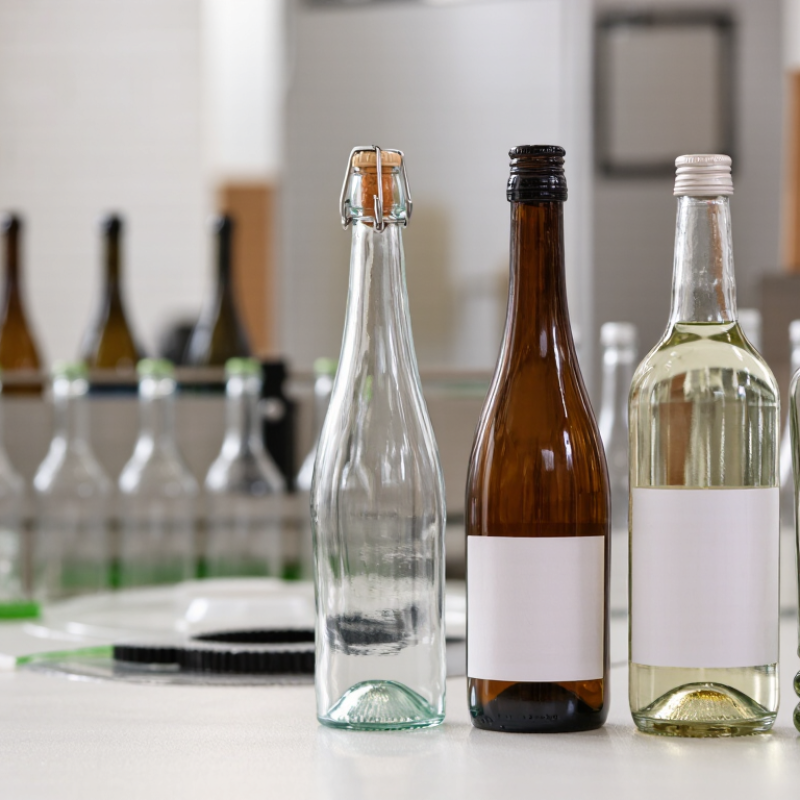
Start with the drink. Its volume, ingredients, and serving style should guide the bottle choice. A 250 ml bottle may suit concentrated beverages, while a 750 ml format works better for family sharing. Measure twice. A bottle that looks attractive may still feel awkward in one-handed use or on a crowded retail shelf.
Match the closure to the beverage’s behavior. Carbonated drinks need closures that maintain pressure during transport and storage. Thick liquids may require wider openings for smooth pouring and easier cleaning. Test the closure with the actual bottle neck, not only with supplier measurements. Small differences can cause leaks, loose seals, or difficult opening. In production trials, fill sample bottles, invert them briefly, and inspect the neck and cap for moisture.
Shelf life also depends on light, oxygen, temperature, and seal quality. Clear glass displays color well, but tinted glass may better protect light-sensitive recipes. Check the liner material for compatibility with acidity, oils, alcohol-free extracts, or strong flavors. Store test samples under realistic conditions, including warm delivery vehicles and chilled display cases. Then compare taste, aroma, color, and carbonation over time. A common mistake is testing only the filled bottle on day one. That result can be misleading. The closure may perform well initially but weaken after repeated handling or temperature changes. Document every trial, even the disappointing ones; those records often reveal the safest volume and packaging combination.
Choosing glass starts with temperature, not appearance. For most water, juice, carbonated drinks, and shelf-stable beverages, soda-lime glass is the practical default. It offers dependable clarity, wide availability, and efficient production costs. Its performance is usually sufficient when filling and storage temperatures change gradually. A 500 ml bottle may leave a warm line, cool in a tunnel, and travel through ordinary warehouses. Still, design matters. Shape, wall thickness, scratches, and closure fit can change breakage risk.
Borosilicate glass deserves attention when thermal shock is severe. Its lower thermal expansion helps it tolerate sharper temperature changes than standard soda-lime glass. Think of a bottle moving from hot filling into cool water, or from refrigeration toward heated service. It is not unbreakable. Test it properly. Uneven heating, impact damage, and poor handling can defeat its advantage. In production trials, test filled bottles through repeated heating and cooling cycles. Measure breakage, leakage, and visual changes, rather than checking one successful run. Supplier data helps, but actual line conditions matter more.
I would challenge the instinct to choose borosilicate for every premium drink. Its added performance may increase material and forming costs without visible customer benefits. Conversely, soda-lime glass may struggle in demanding thermal processes. Record the hottest and coldest contact points, including conveyor delays. Then review the evidence with packaging and filling-equipment specialists. My preference is conservative, but I may be wrong. Small pilot runs often reveal flaws that polished specifications hide.
How to Choose the Best Glass Bottles for Beverage Business?
Set Bottle Specifications: Compare Capacity, Weight, Neck Finish, and Tolerance
A bottle specification should begin with the beverage, filling process, and serving occasion. Nominal capacity is only one measurement. A 500 mL bottle may require additional headspace for carbonation, thermal expansion, or safe filling. Confirm both fill volume and brimful capacity with measured samples. Do not rely only on a drawing.
Weight affects transport cost, shelf stability, and the customer’s perception of quality. Heavier glass can feel premium, but it may increase handling risks and shipping expenses. Check the base design, wall thickness, and vertical load performance. A bottle must survive conveyor movement, case packing, and ordinary warehouse stacking. Lightweight options need stricter testing.
Neck finish controls closure fit and filling efficiency. Match the finish with the intended cap, liner, sealing method, and opening experience. Confirm thread dimensions, finish height, and sealing surface condition. Tolerance deserves equal attention. Small variations in neck diameter or bottle height can cause leakage, loose caps, or machine stoppages. Request inspection data for capacity, weight, height, and finish dimensions. Then test samples on the actual filling line.
I once treated nominal capacity as the complete specification. That assumption was too optimistic. Pilot testing revealed that small dimensional differences affected cap application. A better process combines supplier drawings, sample measurements, closure trials, and transport testing. Some early estimates may be wrong. That is useful information before full production begins.
Choosing a glass bottle begins with safety, not appearance. Ask suppliers for food-contact compliance documents, migration-test results, and batch traceability.
Check the rim under bright light. Tiny chips can damage filling equipment or create consumer hazards. Bottle weight also matters, because uneven walls may increase breakage during transport and handling.
Cullet, or recycled glass, can improve furnace efficiency. According to British Glass industry data, replacing 10% of raw materials with cullet can reduce furnace energy consumption by approximately 2–3%.
The same guidance notes that higher cullet use can lower melting temperatures and reduce carbon emissions. However, the result depends on cullet cleanliness, color separation, and furnace design. The percentage is not magic.
A beverage business should request the supplier’s recycled-content records and contamination controls. Foreign ceramics, stones, and heat-resistant glass can interrupt production.
The Glass Packaging Institute reports that glass is fully recyclable without losing quality, but collection systems still vary widely by region. That limitation deserves attention.
A lightweight bottle may reduce transport emissions, yet it must survive filling, capping, stacking, and cold storage. Test filled samples before ordering at scale. Measure breakage, seal performance, and bottle temperature changes. Sustainability claims need evidence, not attractive wording.
Supplier validation should begin with measurable evidence, not polished samples. FEVE’s 2023 industry statistics report more than 22 million tonnes of European glass packaging production. Large output does not guarantee consistent bottle strength. Request batch records, wall-thickness measurements, annealing details, and complete test reports. Check the bottle neck, shoulder, and base carefully. These areas often show defects first.
Pressure testing matters when beverages contain CO₂. The Brewers Association’s Draught Beer Quality Manual explains that carbonation depends on both temperature and pressure. A bottle safe at 5°C may face higher internal pressure in a warm warehouse. Ask suppliers to test filled bottles above the declared working pressure, then record expansion, leakage, and burst results. ISO 7458 provides a recognized method for internal pressure resistance. Do not accept only one successful sample. Test multiple batches. Small variation is still a warning.
Use ISO 7459 for thermal shock evaluation, especially when bottles move from chilled storage to warm filling areas. A practical screening plan can compare bottles after controlled temperature changes, followed by visual inspection and pressure testing. ASTM D5276 can guide free-fall drop testing, but the drop height should reflect your actual handling route. Test the base, side, and shoulder. Record chips, cracks, and hidden damage. I would not trust a perfect first trial. One flaw remains: laboratory conditions rarely match a wet warehouse floor. Repeat tests after transport simulation, and keep the raw data for supplier reviews.
Match the bottle to serving style and drink concentration. A 250 ml bottle suits concentrated beverages. A 750 ml format supports family sharing. Check one-handed use and shelf spacing before approval.
Choose a closure that maintains pressure during transport and storage. Test the cap on the actual bottle neck. Fill samples, invert them briefly, and inspect for moisture. Small neck differences can cause leaks.
Thick liquids usually need wider openings for smoother pouring. A wider neck also makes cleaning easier. Test filling and pouring with the real recipe. Supplier measurements alone may mislead.
Clear glass shows beverage color clearly. Tinted glass may better protect light-sensitive recipes. Compare color, aroma, and taste during storage. Day-one testing is insufficient.
Consider it when bottles face sharp temperature changes. Examples include hot filling followed by cooling. It may resist thermal shock better than standard glass. It is not unbreakable.
Soda-lime glass suits many water, juice, carbonated, and shelf-stable drinks. It works best when temperature changes happen gradually. Shape, wall thickness, scratches, and closure fit still matter. The cheaper option is not always safer.
Request food-contact compliance documents and migration-test results. Ask for batch traceability records. Inspect the rim under bright light. Tiny chips can damage equipment or create hazards.
Recycled glass, called cullet, can improve furnace efficiency. Using 10% cullet may reduce furnace energy consumption by about 2–3%. Results depend on cleanliness, color separation, and furnace design. The percentage is not magic.
Request recycled-content records and contamination controls. Check for ceramics, stones, and heat-resistant glass. These materials can interrupt production. Test filled bottles before large orders. Claims need evidence.
How to choose glass bottles for beverage business begins with clearly defining the product’s requirements. Consider the beverage type, filling volume, closure style, storage conditions, and expected shelf life before selecting a bottle. Soda-lime glass is suitable for most juices, water, sauces, and other common beverages, while borosilicate glass offers stronger resistance to thermal shock for products exposed to rapid temperature changes. Bottle specifications should also be compared carefully, including capacity, weight, neck finish, dimensional tolerance, and compatibility with filling and sealing equipment.
Safety and sustainability are equally important when evaluating glass packaging. Recycled glass, or cullet, can help improve resource efficiency; using 10% cullet may reduce furnace energy consumption by approximately 2–3%. Before placing an order, suppliers should be validated through pressure, drop-resistance, thermal-shock, and CO₂ impact testing where relevant. A reliable selection process helps ensure consistent quality, safe transportation, efficient production, and a better environmental profile for the beverage business.

Bogart Glass