A glass bottle may look flawless on a shelf, yet still leak during shipping. Why do some glass bottles have better sealing than others? The answer usually lies in the fit between the bottle finish and its closure, not in the glass alone. A consistent neck diameter, smooth sealing surface, compatible cap liner, and suitable application torque all matter. Even a small variation at the mouth can leave a path for air or liquid. It is an easy detail to overlook.
This guide introduces 10 glass bottle manufacturers in China with sealing performance in mind. It considers product range, manufacturing capabilities, quality controls, and experience with different closure systems. Useful checks include neck-finish specifications, sample fit tests, leak testing, and consistency across production batches. Ask suppliers how they verify these points, and request current documentation where available. A polished catalog is helpful, but it cannot replace a sample in your own filling line.
The right choice depends on the product, bottle shape, closure, and transport conditions. A bottle suited to one application may not suit another. This comparison offers a starting point, not a universal ranking; supplier capabilities and specifications can change. Check the details before ordering.
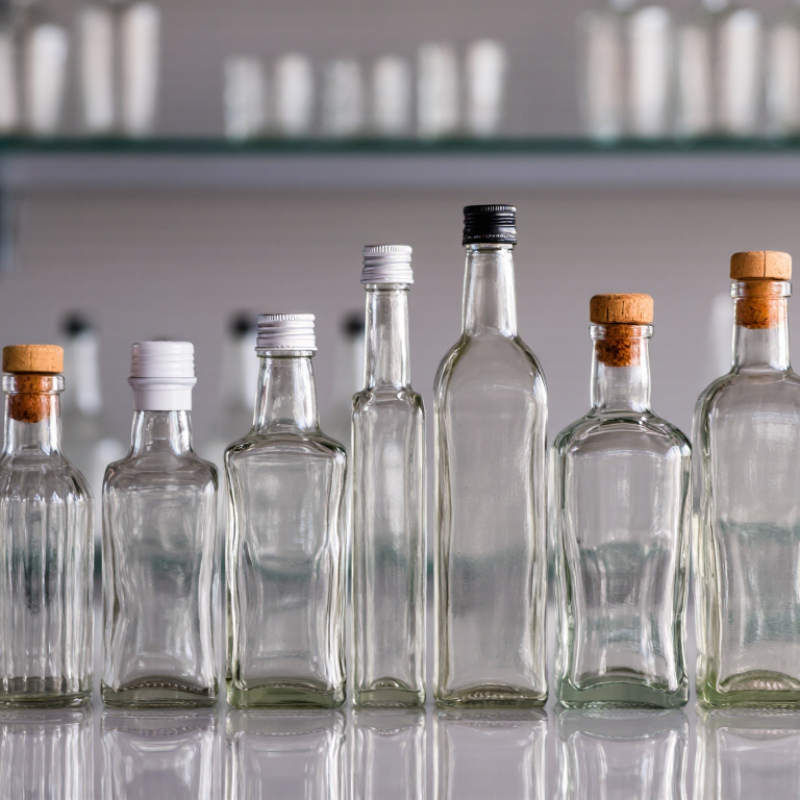
Glass Bottle Sealing: Components, Materials, and Performance
A reliable glass bottle seal depends on the neck finish, closure, and sealing liner working together. Their contact surfaces need to meet evenly. Small defects matter. Chips, uneven threads, or glass dust can create tiny leak paths, even when the bottle looks clean. Inspect neck dimensions and surface condition, then confirm that the closure fits the intended filling line.
Closures may use metal or plastic, while liners can include foam, pulp, or polymer materials. Each responds differently to pressure, temperature, and product contact. A softer liner may conform to minor surface variation, but it can compress too much under excessive torque. A firmer liner may resist compression yet seal poorly on an imperfect finish. There is no universal best choice. Compatibility testing should reflect the actual contents and storage conditions.
Performance checks should include application torque, leakage, and seal retention after transport or temperature changes. Watch for liner movement and cap loosening. A simple inversion test can reveal obvious leaks, but it cannot replace a repeatable test under controlled conditions. In practice, results may vary between production batches; that detail is easy to overlook. Record the closure settings, inspect sample bottles, and review failures before changing materials or tightening settings.
Glass Bottle Sealing: Components, Materials, and Performance
Typical linear thermal expansion coefficients of glass and common sealing or closure materials
Representative values are approximate and expressed in µm/m·°C (equivalent to ppm/°C). Polymer values vary by formulation. Differences in thermal expansion can affect how a closure and bottle finish move with temperature; they do not, on their own, measure sealing performance. Seal quality also depends on finish geometry, liner design, compression, and application conditions.
Key Criteria for Evaluating Chinese Glass Bottle Manufacturers
When comparing Chinese glass bottle manufacturers for better sealing, look beyond catalog photos. Ask how neck-finish dimensions are checked and how often inspection records are reviewed. A closure that feels tight on one sample may leak after filling or transport. Request samples from a normal production run, not only hand-selected pieces. Check rim smoothness, thread consistency, bottle weight, and visible bubbles or cracks. Small flaws matter.
Ask for documented leak-test methods using your intended cap, liner, filling temperature, and product viscosity. Test several units after storage and vibration; one successful trial proves little. Confirm whether the factory can trace batches and explain corrective actions when defects appear. Useful evidence includes calibration records, inspection plans, and clear technical responses. Consider a site visit or independent audit when order volume justifies it. Still, paperwork has limits. A tidy report cannot replace testing on your own packaging line. Compare lead times, minimum orders, shipping protection, and communication quality alongside sealing performance. Some buyers overfocus on unit price, which can hide rework, breakage, or inconsistent neck dimensions. The best supplier is not automatically the largest. Choose one that shares measurable data, accepts practical trials, and discusses weaknesses without making absolute promises.
Ten Chinese Manufacturers Known for Reliable Bottle Sealing
Choosing among ten Chinese glass bottle manufacturers requires more than checking appearance. Reliable sealing starts with a consistent neck finish, a compatible closure, and clean contact surfaces. A cap can feel tight yet still leak if the bottle’s rim varies. Test filled samples upright, on their sides, and after temperature changes. Small details matter.
Grand View Research valued the global glass packaging market at USD 65.8 billion in 2023 and projected 4.5% annual growth through 2030. That market figure is not a sealing-performance score, but it shows why dependable packaging matters. Ask each manufacturer for neck-finish inspection records and documented leak-test results. Check how samples perform with your actual cap and liner, not just a standard test closure. ISO 7458 covers internal pressure resistance for glass containers; it does not, by itself, prove a complete bottle-and-cap seal. Easy to miss. A practical supplier comparison should include repeat tests across production batches, clear defect limits, and follow-up when results vary. No test is perfect. Grand View Research, Glass Packaging Market Size, Share & Trends Analysis Report, 2024–2030.
China Top 10 Glass Bottle Manufacturers for Better Sealing - Ten Chinese Manufacturers Known for Reliable Bottle Sealing
A supplier-specific ranking cannot be substantiated without verified manufacturer records. The table below is a practical, evidence-based checklist for comparing ten anonymous suppliers; it does not claim verified rankings or performance results.
| Anonymous Supplier |
Sealing Dimension |
Evidence to Request |
Comparison Basis |
| Supplier 1 |
Bottle-finish dimensions |
Current dimensional inspection report and controlled finish drawing. |
Compare measured finish dimensions with the agreed drawing and closure specification. |
| Supplier 2 |
Closure compatibility |
Documented trials using the intended cap, cork, liner, or other closure. |
Assess the complete bottle-and-closure combination, not the bottle alone. |
| Supplier 3 |
Leak-test procedure |
Written test method, sample plan, test conditions, and recorded results. |
Compare results only when test conditions and acceptance criteria are equivalent. |
| Supplier 4 |
Closure application consistency |
Application instructions and trial records for the selected closure system. |
Confirm the recommended application method is suitable for the filling line and product. |
| Supplier 5 |
Glass defects at the sealing surface |
Inspection criteria and records for chips, checks, cracks, and finish damage. |
Review the documented defect limits and how nonconforming bottles are controlled. |
| Supplier 6 |
Pressure or vacuum suitability |
Product-specific test data where the package will experience pressure or vacuum. |
Match the test conditions to the product, filling process, and distribution environment. |
| Supplier 7 |
Thermal-process suitability |
Relevant process-trial or thermal-shock test records for the intended use. |
Verify the bottle and closure together under the actual heating and cooling profile. |
| Supplier 8 |
Batch traceability |
Lot identification and records linking production batches to inspection results. |
Check that affected production can be identified and investigated by lot. |
| Supplier 9 |
Sampling and quality control |
Inspection plan, measurement records, and procedures for handling rejected lots. |
Compare the supplier’s documented controls with the buyer’s agreed quality plan. |
| Supplier 10 |
Change control |
Written notification process for changes to the bottle design, production site, or process. |
Confirm changes affecting fit or sealing are reviewed and requalified before supply. |
Comparing Closure Compatibility, Customization, and Quality Control
A glass bottle seals well only when its finish and closure work together. Compare neck dimensions, thread shape, and contact surfaces before choosing a cap or liner. A sample that twists on easily may still leak when filled, cooled, or transported. Test with the actual product and filling conditions.
Small details count. Ask manufacturers how they check neck-finish tolerances and inspect glass for chips or uneven rims. A clean, consistent sealing surface helps the liner compress evenly. Useful checks include trial capping, upright storage, and gentle inversion tests. Record results across several bottles, not just one. One successful sample proves very little.
Customization can cover bottle capacity, shoulder shape, color, embossing, and closure pairing. Confirm that design changes will not compromise cap fit or production consistency. Request dimensional drawings and samples before approving tooling. Quality control should include documented inspection steps, clear defect limits, and traceable production batches. Some suppliers provide detailed reports; others may offer only basic checks. That gap deserves attention. A polished catalog is not evidence of reliable sealing, and even careful testing cannot prevent every handling issue.
Matching Manufacturers to Packaging Needs and Applications
Matching a glass bottle manufacturer to a packaging need starts with the product, not a catalog photo. A narrow-neck bottle may suit oils or concentrates, while a wide-mouth jar can make filling and cleaning easier. Share the product’s viscosity, filling temperature, storage conditions, and target capacity before requesting samples. These details help manufacturers recommend suitable glass thickness, neck finishes, and closure options. Small details matter. A cap and bottle can look compatible yet leak if their thread dimensions or liner materials do not match.
For a fair comparison among China’s top manufacturers, ask for dimensional drawings, production tolerances, and documented inspection procedures. Request samples from a production run, not only a hand-finished prototype. Test them with the intended closure, product, and shipping conditions. Check for leakage, chips around the finish, and variation in bottle weight. Also discuss minimum order quantities, mold costs, lead times, and how defects are handled. A low unit price may hide extra setup costs. And a sample is not proof of consistent output. I would avoid choosing on price alone; sometimes that shortcut looks efficient until the first shipment arrives. Manufacturers with relevant application experience and clear quality records are easier to assess, even when their designs are less flashy.
Conclusion
This article explores the factors that help glass bottles form a dependable seal, including bottle-neck design, closure components, material choices, and manufacturing precision. It answers the question, “Why do some glass bottles have better sealing than others,” by showing how the fit between a bottle and its closure, consistent dimensions, and suitable sealing materials can affect leak resistance and product protection. It also outlines the main criteria for evaluating manufacturers in China, such as production capability, quality-control procedures, customization options, and experience with different closure systems.
The article compares ten Chinese manufacturers known for reliable bottle sealing without relying on brand names, and explains how to assess their compatibility with different caps and packaging requirements. It also considers how customization and inspection practices may influence consistency from one production run to another. By matching bottle designs and manufacturer capabilities to specific applications, readers can make a more informed choice for packaging needs where secure sealing, dependable performance, and practical production support matter.

 Bogart Glass