China Best Borosilicate vs Soda Lime Glass Bottles?

Time:2026-09-15 Author:Henry
0%

Choosing China’s best glass bottle depends on temperature, contents, production volume, and expected service life. A bottle may look clear and strong, yet its performance depends on the glass composition and manufacturing process. This comparison examines borosilicate and soda-lime bottles through practical sourcing experience, technical evidence, and quality-control requirements.

What is the difference between borosilicate and soda-lime glass bottles? Borosilicate glass contains boron oxide, which improves resistance to thermal shock and chemical changes. It suits laboratory containers, hot-fill packaging, reusable drinkware, and products exposed to sudden temperature shifts. Soda-lime glass is more affordable and widely available. It works well for everyday beverage bottles, cosmetic packaging, food jars, and large-volume production. However, it generally handles rapid heating and cooling less effectively.

The best Chinese supplier should provide more than attractive samples. Buyers should review material certificates, wall-thickness consistency, annealing records, dimensional tolerances, and migration or chemical-resistance test results when relevant. Factory audits can reveal details that photographs miss, such as uneven rims, tiny bubbles, rough seams, or weak shoulders. Small defects matter. They may affect filling, sealing, transport, and customer trust.

Cost also requires careful judgment. Borosilicate may reduce breakage risks in demanding applications, but soda-lime can offer better value for standard packaging. No single bottle wins every test. A lower purchase price can become expensive after rejects, damaged shipments, or inconsistent closures. Some sourcing decisions remain imperfect because forecasts and usage conditions change. That is why responsible selection should compare verified samples, real operating temperatures, supplier capability, and long-term reliability instead of relying on price alone.
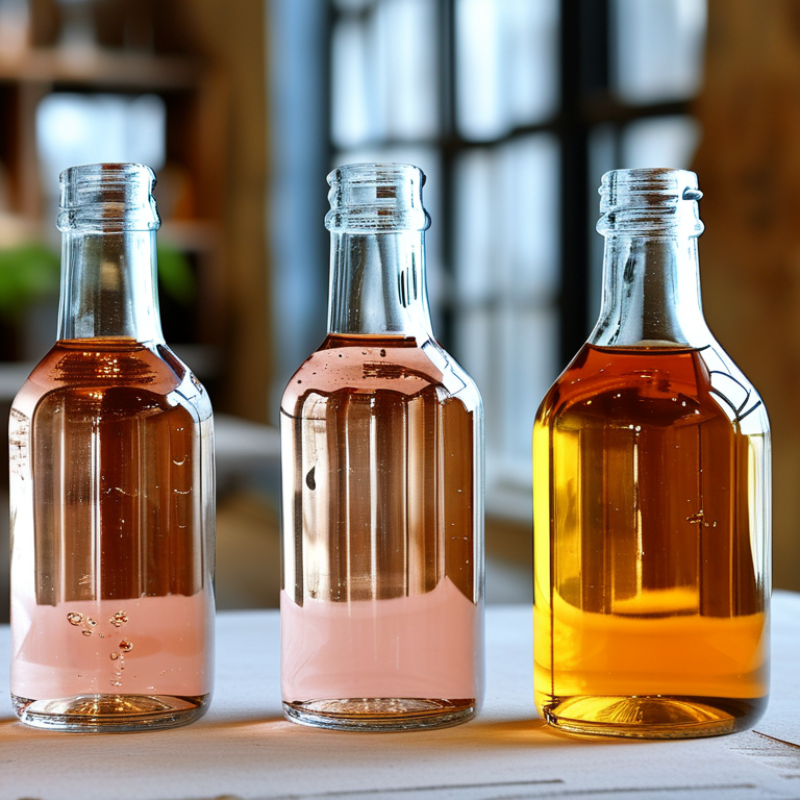
China Best Borosilicate vs Soda Lime Glass Bottles?

Glass Bottle Types Manufactured in China

China Best Borosilicate vs Soda Lime Glass Bottles?

China manufactures both borosilicate and soda lime bottles at large scale. The better choice depends on temperature, chemistry, and production cost. Grand View Research valued the global glass packaging market at about USD 82.56 billion in 2023. This demand supports a broad Chinese supplier base, but quality still varies between factories.

Soda lime glass remains the common option for beverage, cosmetic, and general food bottles. It offers lower material costs and efficient high-speed production. Its thermal expansion is higher, so sudden temperature changes may cause cracking. Borosilicate glass contains more boron oxide and usually expands less under heat. Laboratory specifications often cite a thermal expansion coefficient near 3.3 × 10⁻⁶/K, compared with roughly 9 × 10⁻⁶/K for standard soda lime glass. That difference matters for hot filling, sterilization, and repeated heating.

Ask Chinese manufacturers for wall-thickness measurements, thermal-shock testing, chemical-resistance results, and batch traceability. ISO 719 testing can evaluate hydrolytic resistance. A clear drawing should define the neck finish, overflow capacity, base thickness, and allowable defects. In practice, “borosilicate” is sometimes used too loosely. I would verify the glass composition, not trust the label alone. A cheaper bottle may look perfect under showroom lighting, then fail during filling or transport. Small pilot orders reveal more than polished samples.

China Best Borosilicate vs Soda Lime Glass Bottles? - Glass Bottle Types Manufactured in China

This chart compares typical borosilicate and soda-lime glass properties using a relative index, with soda-lime glass set at 100. The thermal expansion index is calculated on a lower-is-better basis, while softening point and lightweight density are shown on a higher-is-better basis. Typical reference values are approximately 3.3 versus 9.0 × 10⁻⁶/K for thermal expansion, 820°C versus 720°C for softening point, and 2.23 versus 2.50 g/cm³ for density. Actual values vary by glass composition and manufacturing specification.

Chemical Composition and Key Material Differences

China Best Borosilicate vs Soda Lime Glass Bottles?
Chemical Composition and Key Material Differences

Borosilicate glass contains high levels of silica and boric oxide. Soda lime glass mainly combines silica, sodium oxide, calcium oxide, and magnesium compounds. These ingredients change how each bottle behaves during use. Borosilicate glass expands less when temperatures change. It usually handles hot filling, cooling, and repeated washing with lower thermal stress. Soda lime glass is less resistant to sudden temperature shifts. However, it remains practical for room-temperature drinks, dry goods, and many everyday containers.

In production checks, I would examine the glass recipe, wall thickness, annealing quality, and test records. Composition alone does not guarantee safety or durability. A poorly annealed bottle can crack, even when its base material performs well. Borosilicate can also cost more and may require tighter forming controls. Soda lime often offers efficient manufacturing and good performance during ordinary handling. The right choice depends on temperature, chemical contact, transport, and cleaning conditions. Buyers sometimes oversimplify this decision.

Tips: Ask for thermal shock data, chemical resistance results, and food-contact documentation. Check whether the bottle meets real filling temperatures, not ideal laboratory conditions. Avoid mixing hot liquid with a cold bottle. Small details matter. If repeated heating is expected, test filled samples before large-scale production. Even reliable specifications need practical verification.

Heat Resistance, Durability, and Safety Comparison

China Best Borosilicate vs Soda Lime Glass Bottles?

Borosilicate glass handles heat changes better because it expands less during heating and cooling. It suits hot tea, laboratory-style use, and repeated temperature changes. Soda lime glass is more common and usually costs less. It works well for room-temperature drinks and everyday storage. However, neither glass is unbreakable.

Durability depends on more than glass type. A thick soda lime bottle may resist impacts better than a thin borosilicate bottle. Scratches, sharp temperature changes, and damaged rims can weaken either material. For safety, check the bottle after each drop or strong impact. Small cracks may spread when the bottle is filled with hot liquid. The comparison is not perfectly simple.

Tips: Match the bottle to its routine. Use borosilicate for hot filling only when the product instructions allow it. Do not pour boiling liquid into a chilled bottle. Warm the bottle gradually, and avoid placing hot glass on a wet or cold surface. Choose smooth, undamaged interiors for easier cleaning. Inspect caps and seals too. Glass safety is often overlooked.

Choosing the Best Glass for Different Bottle Uses

Choosing the best glass depends on how the bottle will be used, filled, cleaned, and transported.

Borosilicate glass handles sudden temperature changes better than soda lime glass. This makes it suitable for laboratory containers, hot beverages, cooking oils, and bottles exposed to repeated heating. It also resists many chemicals and usually creates less thermal stress.

Soda lime glass remains a practical choice for everyday water, juice, cosmetics, and pantry bottles. It costs less and is easier to produce in large quantities. For room-temperature storage, its performance is often sufficient. However, it can crack when boiling liquid enters a cool bottle.

Always check the supplier’s thermal shock rating, not only the glass name.

Shape matters too. A thick base may improve stability, while a narrow neck can reduce spills. I have seen suitable glass fail because the cap, seal, or filling process was poorly matched. That detail is easy to miss.

Borosilicate is not automatically the better option. It may add unnecessary cost for simple household use. Soda lime may also be unsuitable where repeated heating, rapid cooling, or strong chemical contact is expected. Test the complete bottle, including closure and decoration, under realistic conditions before placing a large order.

Quality Standards and Supplier Evaluation in China

Choosing between borosilicate and soda lime bottles in China requires more than comparing prices. Borosilicate glass tolerates rapid temperature changes and suits laboratory, cosmetic, and hot-fill applications. Soda lime glass usually offers lower cost and efficient high-volume production. The right choice depends on temperature, chemical contact, transport, and closure requirements. Details matter.

Supplier evaluation should begin with documented quality systems, not attractive product photos. Request ISO 9001 records, batch inspection reports, material declarations, and traceability procedures. For food-contact packaging, check compliance with applicable Chinese requirements, including GB 4806.5, when relevant. Ask whether the supplier tests thermal shock, hydrolytic resistance, wall thickness, and dimensional tolerance. Do not accept vague certificates. Ask for test dates and laboratory details. Documents can be incomplete.

An on-site audit can reveal important production habits. Inspect furnace controls, annealing equipment, mold maintenance, and packing areas. Review how rejected bottles are separated from approved stock. Request samples from different production batches, not only showroom pieces. Measure neck finish accuracy and inspect chips around the rim under strong light. A failed sample is useful. It shows where controls need improvement. Even a capable supplier may miss a small defect during a busy shift, so independent pre-shipment inspection remains valuable.

China Best Borosilicate vs Soda Lime Glass Bottles? - Quality Standards and Supplier Evaluation in China

Technical comparison for bottle selection, quality control, and supplier evaluation. Values shown are typical industry ranges and should be verified against the approved product specification and test report.

Evaluation Dimension Borosilicate Glass Bottles Soda-Lime Glass Bottles Purchasing and Supplier Evaluation Guidance
Glass Classification Typically Type I borosilicate glass; pharmaceutical borosilicate 3.3 is commonly specified for demanding thermal and chemical applications. Typically Type III soda-lime glass for general-purpose containers. Treated soda-lime glass may be classified as Type II for selected pharmaceutical uses. Request the exact glass type in the technical specification. Do not accept descriptions such as “high-quality glass” without a defined classification.
Typical Chemical Composition Silica-based glass containing a significant boron oxide component; boron oxide commonly falls within approximately 12–13% for borosilicate 3.3 formulations. Silica-based glass containing substantial sodium and calcium oxides; the formulation is optimized for cost-effective forming and general container use. Ask for a controlled material specification and batch traceability. Exact composition may vary by approved raw-material formulation.
Coefficient of Thermal Expansion Approximately 3.3 × 10⁻⁶/K for borosilicate 3.3. Typically approximately 8–10 × 10−6/K, depending on formulation and measurement method.
Thermal-Shock Resistance High. Suitable for repeated temperature changes when the bottle geometry, wall thickness, and finishing quality are properly controlled. Moderate to low compared with borosilicate. Sudden heating or cooling can create a higher risk of cracking. Request thermal-shock test results using the actual bottle design, not only a generic glass-material certificate.
Chemical Resistance Generally high resistance to water, acids, and many laboratory or pharmaceutical solutions. Strong alkalis and prolonged exposure can still attack the glass. Suitable for many food, beverage, cosmetic, and household applications, but generally less resistant to water and chemical attack than borosilicate. For sensitive products, require hydrolytic-resistance testing, extractables assessment, and compatibility testing with the actual formulation.
Hydrolytic Resistance Often suitable for Type I pharmaceutical packaging when manufactured and tested to the applicable standard. Untreated soda-lime is commonly used for general packaging. Surface-treated soda-lime may achieve improved hydrolytic performance for defined applications. Confirm whether the bottle is Type I, Type II, or Type III and request batch-level test evidence where regulatory performance is required.
Temperature Capability Better suited to laboratory heating, sterilization cycles, hot filling, and repeated temperature changes, subject to the approved design limits. Suitable for ambient use and selected hot-fill processes when validated. It is less tolerant of rapid temperature changes. Define filling temperature, cooling rate, sterilization cycle, and maximum service temperature before approving the material.
Transparency and Appearance Usually clear with good optical quality; color and clarity depend on raw materials, melting control, and forming conditions. Usually clear, amber, or colored. It offers broad color options and is widely used for consumer packaging. Set measurable limits for color, haze, bubbles, stones, cords, scratches, and cosmetic defects. Use approved master samples for visual comparison.
Mechanical Strength Material strength is not automatically higher than soda-lime. Practical durability depends strongly on wall thickness, shape, annealing, and surface damage. Can provide good practical strength in well-designed containers and is widely used for standard packaging formats. Evaluate impact resistance, top-load performance, internal pressure, and drop-test results using production samples.
Weight and Wall Thickness May require a carefully optimized design because low-expansion glass does not by itself guarantee a lighter bottle. Often available in cost-efficient lightweight designs for high-volume packaging. Compare filled-product performance, not only empty-bottle weight. Confirm minimum wall thickness at the shoulder, heel, and base.
Common Applications Laboratory bottles, pharmaceutical containers, diagnostic packaging, injectable-related applications, specialty food containers, and heat-resistant household products. Beverage bottles, food jars, cosmetic containers, household packaging, candle vessels, and general-purpose liquid containers.
Relevant International Standards ISO 3585 ASTM E438 Type I USP <660> Ph. Eur. 3.2.1 ASTM E438 Type II/III USP <660> Ph. Eur. 3.2.1 Confirm the destination-market requirements. A standard reference should include the edition, test method, acceptance criteria, and responsible laboratory.
Dimensional Tolerances Should be defined for height, diameter, neck finish, thread, wall thickness, capacity, and verticality. Should be defined for the same parameters; high-volume container production requires stable mold and forming control. Request a dimension drawing with tolerances and inspect samples using calibrated gauges, optical measurement, or coordinate measurement where appropriate.
Neck Finish and Closure Fit Can be produced with screw, crimp, snap-on, or other finishes, subject to mold and forming capability. Widely available in common food, beverage, cosmetic, and pharmaceutical neck finishes. Validate thread profile, sealing surface, torque, leakage, liner compatibility, and closure interchangeability with the final cap or stopper.
Annealing and Residual Stress Controlled annealing is essential because residual stress can reduce thermal-shock performance and increase breakage. Controlled annealing is also essential, particularly for thin-wall or large-format bottles.
Surface Treatment Options May use selected external coatings or surface treatments to improve abrasion resistance or handling performance. May use internal or external treatments, including processes intended to improve hydrolytic resistance or surface durability. Request treatment chemistry, process controls, migration or extractables data where relevant, and confirmation that treatment is compatible with the product.
Defect-Control Requirements Typical critical defects include cracks, checks, open blisters, stones, severe cords, sharp edges, and sealing-surface damage. Typical critical defects are the same; cosmetic defect limits may be more important for consumer-facing packaging. Create a defect catalog with critical, major, and minor classifications. Define an agreed AQL plan and inspection level before mass production.
Factory Audit Priorities in China Inspect furnace control, raw-material batching, forming temperature, annealing lehr, laboratory testing, mold maintenance, and traceability. Inspect the same process areas, with additional focus on high-speed forming stability, lightweighting control, color consistency, and packaging efficiency. Verify production capacity, equipment ownership, quality personnel, calibration records, corrective-action history, and separation of export batches where required.
Required Supplier Documents Material specification, technical drawing, certificate of analysis, hydrolytic-resistance report, thermal-shock data, dimensional inspection report, and batch traceability records. Material specification, technical drawing, certificate of analysis, dimensional inspection report, surface-treatment records if applicable, and batch traceability records. Documents should identify the production batch, test date, test method, equipment or laboratory, acceptance criteria, and authorized approval.
Sampling and Pre-Shipment Inspection Use production samples for dimensional, visual, leakage, thermal-shock, closure-fit, and packaging tests. Use production samples for dimensional, visual, leakage, impact, closure-fit, capacity, and packaging tests.
Cost Consideration Usually higher material and processing cost, but may reduce failure risk in demanding thermal or chemical applications. Usually more economical for standard packaging and high-volume applications with moderate thermal and chemical requirements. Compare total cost of ownership, including breakage, rejects, testing, shipping weight, sterilization requirements, and regulatory compliance.
Best-Fit Recommendation Make the final selection after product compatibility testing, pilot production, closure validation, and confirmation of the supplier’s process capability.
Technical note: Classification, performance, and acceptance criteria can differ by jurisdiction and application. ISO 3585 is commonly associated with borosilicate glass 3.3 material properties, while ASTM E438 and USP <660> classify glass used for pharmaceutical containers. Always confirm the latest applicable edition and the requirements of the destination market.

FAQS

When is borosilicate glass the better choice?

Choose borosilicate glass for sudden temperature changes. It suits laboratory containers, hot beverages, cooking oils, and repeated heating. It creates less thermal stress. Still, testing is necessary.

When is soda lime glass sufficient?

Soda lime glass works well for room-temperature water, juice, cosmetics, and pantry storage. It costs less and supports large-volume production. It may crack when boiling liquid enters a cool bottle.

Does the glass name guarantee thermal safety?

No. Check the supplier’s thermal shock rating. Glass composition alone is not enough. Test heating and cooling cycles with the complete bottle.

How does bottle shape affect performance?

A thick base can improve stability on a shelf. A narrow neck may reduce spills during pouring. The cap and seal also matter. Small details can cause large failures.

What supplier documents should buyers request?

Request quality-system records, batch inspection reports, material declarations, and traceability procedures. Ask for test dates and laboratory details. Vague certificates deserve caution.

Which tests are useful before placing a large order?

Check thermal shock, chemical resistance, wall thickness, and dimensional tolerance. Measure the neck finish carefully. Inspect the rim under strong light. Tiny chips matter.

What should an on-site factory audit include?

Inspect furnace controls, annealing equipment, mold maintenance, and packing areas. Review how rejected bottles are separated. Production habits reveal more than product photos.

Why are samples from several batches important?

Showroom samples may hide normal production variation. Request samples from different batches. Compare walls, rims, dimensions, closures, and surface quality. One sample is not proof.

Is independent pre-shipment inspection still necessary?

It remains useful, even with a capable supplier. A small defect may escape during a busy shift. Inspect before shipment. Perfect control is unlikely.

Conclusion

China manufactures a wide range of glass bottles, with borosilicate and soda-lime glass being the two most common options. What is the difference between borosilicate and soda-lime glass bottles? The main distinction lies in their chemical composition and performance. Borosilicate glass contains more boron oxide, giving it superior resistance to thermal shock, temperature changes, and chemical reactions. Soda-lime glass is more economical, easier to produce, and suitable for many everyday packaging applications, although it is generally less resistant to sudden heat changes.

Choosing the right material depends on the bottle’s intended use. Borosilicate glass is ideal for laboratory containers, heat-resistant drinkware, cooking products, and applications requiring high durability and safety. Soda-lime glass is often appropriate for beverage, food, cosmetic, and general storage bottles. When evaluating Chinese suppliers, buyers should review material specifications, production consistency, dimensional accuracy, testing procedures, and certifications. A reliable supplier should also provide clear quality-control records, sample approval, and appropriate packaging to protect bottles during transportation.

Henry

Henry

Henry is a dedicated marketing professional with a profound expertise in the company's offerings. With years of experience in the industry, he possesses an impressive understanding of the market dynamics and consumer behaviors that drive success. Henry is committed to sharing his insights through......