Glass bottles often leave a production line looking flawless, then show fine scratches after transport or filling. These marks may appear around the shoulder, base, or contact points between bottles. They can reduce shelf appeal and make quality control more difficult. How to reduce scratches on glass bottle surfaces depends on controlling friction, pressure, and careless movement at every stage.
This guide presents seven practical tips drawn from routine packaging, inspection, and warehouse handling practices. It examines conveyor contact, bottle spacing, protective materials, cleaning methods, and employee handling habits. A properly aligned guide rail can prevent repeated rubbing along one narrow band. Clean, soft separators can protect bottles inside cartons. Even small glass fragments matter. Remove them quickly.
Lighting also deserves attention. Scratches can hide under weak factory lighting. Use angled light during inspections. Check empty bottles before filling, then inspect finished units again. A clean microfiber cloth may reveal residue, but aggressive wiping can create new marks. That detail is easy to overlook. It happened in real handling trials.
No single adjustment solves every scratching problem. Bottle shape, glass quality, coating, conveyor speed, and packaging design all influence results. Some recommendations may need testing on your equipment. Record the damaged area, contact surface, and operating conditions before changing several variables. Otherwise, improvement becomes difficult to measure. The goal is not perfection overnight. It is consistent reduction supported by evidence, careful observation, and realistic maintenance routines.
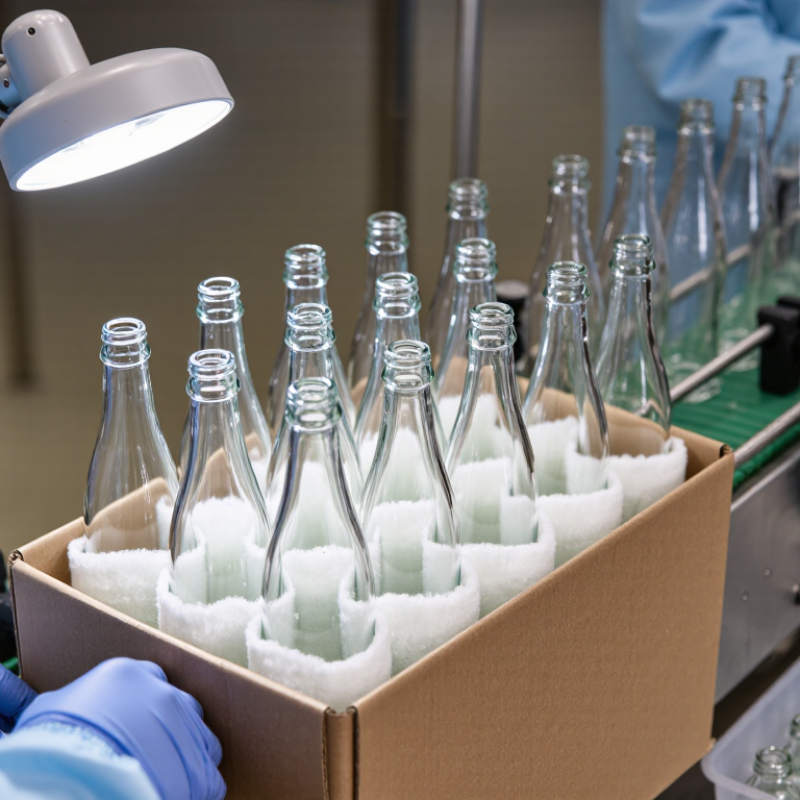
Scratches on glass bottles usually begin with contact, not chemistry. During filling and packing, bottles can rub against guide rails, conveyor belts, metal dividers, or neighboring bottles. Fine dust makes this worse. A single hard particle can act like sandpaper between two moving surfaces. Impact marks also appear when bottles drop onto tables or strike star wheels. Thermal shock may weaken already damaged areas. ISO 7458:2019 identifies thermal resistance as a key glass-container performance factor, although it does not measure surface scratches directly.
Tip 1: Keep conveyor surfaces clean and inspect them every shift. Tip 2: Replace worn guides before exposed metal touches glass. Tip 3: Reduce bottle-to-bottle pressure at transfer points. Tip 4: Separate bottles with suitable dividers during transport. The Glass Packaging Institute states that glass containers are continuously reused and recycled, making surface durability important throughout handling cycles. Still, many inspections focus on cracks only. That is a weakness.
Tip 5: Check for sharp edges on pallets, trays, and clamps. Tip 6: Control sudden temperature changes during washing and filling. Tip 7: Record scratch locations, not just defect totals. Repeated marks near the shoulder may indicate guide misalignment. Marks around the base often suggest conveyor or pallet contact. ASTM International’s quality principles emphasize consistent sampling and documented inspection conditions. That matters because lighting can hide shallow scratches. A bottle may look acceptable under soft warehouse light, yet show visible abrasion under a focused inspection lamp. Some prevention decisions still rely too heavily on appearance alone.
| Tip | Main Scratch Cause | How the Damage Happens | Recommended Preventive Action | Inspection Focus | Risk Level |
|---|---|---|---|---|---|
| Tip 1 | Hard abrasive particles, especially quartz-containing dust or sand | Particles harder than ordinary container glass can become trapped between the bottle and a contact surface, producing visible lines during movement. | Keep bottles and work surfaces clean. Use filtered air, clean water, or a soft lint-free cloth to remove loose particles before handling. | Look for random fine lines, especially on the shoulder, heel, and base-contact areas. | High |
| Tip 2 | Bottle-to-bottle contact during conveying, packing, or transport | Repeated contact creates friction. The risk increases when bottles collide, slide, or remain pressed together under load. | Maintain suitable spacing, reduce unnecessary sliding, and use guides or separators made from clean, non-abrasive materials. | Check for parallel or repeated marks on the same contact zones across multiple bottles. | High |
| Tip 3 | Metal guides, rails, clamps, and handling equipment | Rough, damaged, or contaminated equipment can drag particles across the glass surface and create linear scratches. | Inspect contact components regularly. Remove burrs, replace damaged parts, and prevent abrasive debris from collecting on equipment. | Trace scratches back to fixed machine-contact points or guide locations. | High |
| Tip 4 | Improper cleaning materials or dry wiping | Dirty cloths, abrasive pads, and dry wiping can move hard particles across the surface instead of lifting them away. | Pre-rinse bottles when appropriate and use clean, soft, non-abrasive materials. Avoid scouring pads and contaminated cloths. | Compare scratch patterns before and after cleaning; concentrated marks often indicate a cleaning-related source. | Medium |
| Tip 5 | Sharp edges, chips, and damaged packaging materials | A chipped bottle, broken divider, staple, or exposed packaging edge can act as a concentrated point of contact and mark nearby glass. | Remove chipped containers from circulation and inspect cartons, dividers, trays, and pallets for sharp or broken areas. | Check for localized scratches, chips, or impact marks near packaging contact points. | Medium |
| Tip 6 | Excessive pressure, vibration, or unstable stacking | Load forces and vibration increase rubbing between bottles and can turn minor surface contact into visible abrasion. | Stabilize loads, avoid overstacking, use appropriate separators, and minimize vibration during internal and external transport. | Inspect the lower layers of stacks and areas exposed to repeated vibration or shifting. | Medium |
| Tip 7 | Thermal shock or impact-related surface weakness | Sudden temperature changes or impact can create chips, cracks, or local damage that makes later abrasion more noticeable. | Control rapid temperature transitions, handle bottles carefully, and segregate bottles with chips, cracks, or impact damage. | Look for scratches connected to chips, star-shaped impact marks, or crack-like features. | Low to Medium |
| Key principle: Most preventable glass-bottle scratches result from abrasive particles combined with sliding contact, repeated impact, or pressure. Clean surfaces, controlled handling, equipment maintenance, and appropriate separation are the primary controls. | |||||
Most scratches begin with physical contact, not chemical reactions. Bottles rub against rails, belts, dividers, or neighboring bottles during handling.
Fine dust can sit between moving surfaces. One hard particle may act like sandpaper as bottles slide past each other.
Check conveyor belts, guide rails, transfer points, star wheels, pallets, trays, and clamps. Look for exposed metal and sharp edges every shift.
Lower pressure at transfer points and use individual dividers during transport. Bottles should fit securely without rubbing or shifting excessively.
Silicone sleeves, nonwoven fabric, clean foam, and molded pulp can cushion contact. Avoid rough wood, exposed metal, and splintered separators.
No. Excessive padding may let bottles move inside a crate. I once assumed thicker padding was safer. That assumption failed.
Use rigid plastic crates with rounded edges and separate compartments. Keep bottles upright when suitable, and remove trapped dust regularly.
Use a bright, angled inspection light rather than soft overhead lighting. Shallow abrasion may disappear under warehouse lighting but show clearly at an angle.
Marks near the shoulder may suggest guide misalignment. Scratches around the base often indicate conveyor, pallet, or table contact.
Sudden changes during washing or filling may weaken already damaged areas. Control temperature transitions carefully. Appearance alone is not enough.
Glass bottles can develop scratches through contact with hard surfaces, abrasive particles, unsuitable tools, and careless handling during storage or transportation. Understanding these causes is the first step in preventing damage. Safer handling materials, such as soft cloths, padded dividers, and smooth storage surfaces, can reduce friction and impact. Bottles should also be kept separated from metal objects, rough containers, and loose debris.
Learning How to reduce scratches on glass bottle surfaces involves using gentle cleaning methods and avoiding harsh scouring pads or gritty cleaners. Rinse bottles before wiping, choose non-abrasive cleaning tools, and dry them with a soft, clean cloth. Protective packaging, secure placement, and careful transport can further limit movement and collisions. By combining suitable materials, regular inspection, careful cleaning, and proper packaging, users can help maintain a smooth, clear, and scratch-free glass surface for longer.

 Bogart Glass